
Dr. Stefan Handke from ACQUIN, Germany, Delivers Plenary Lecture at Education, Research & Development 2015
8 September 2015
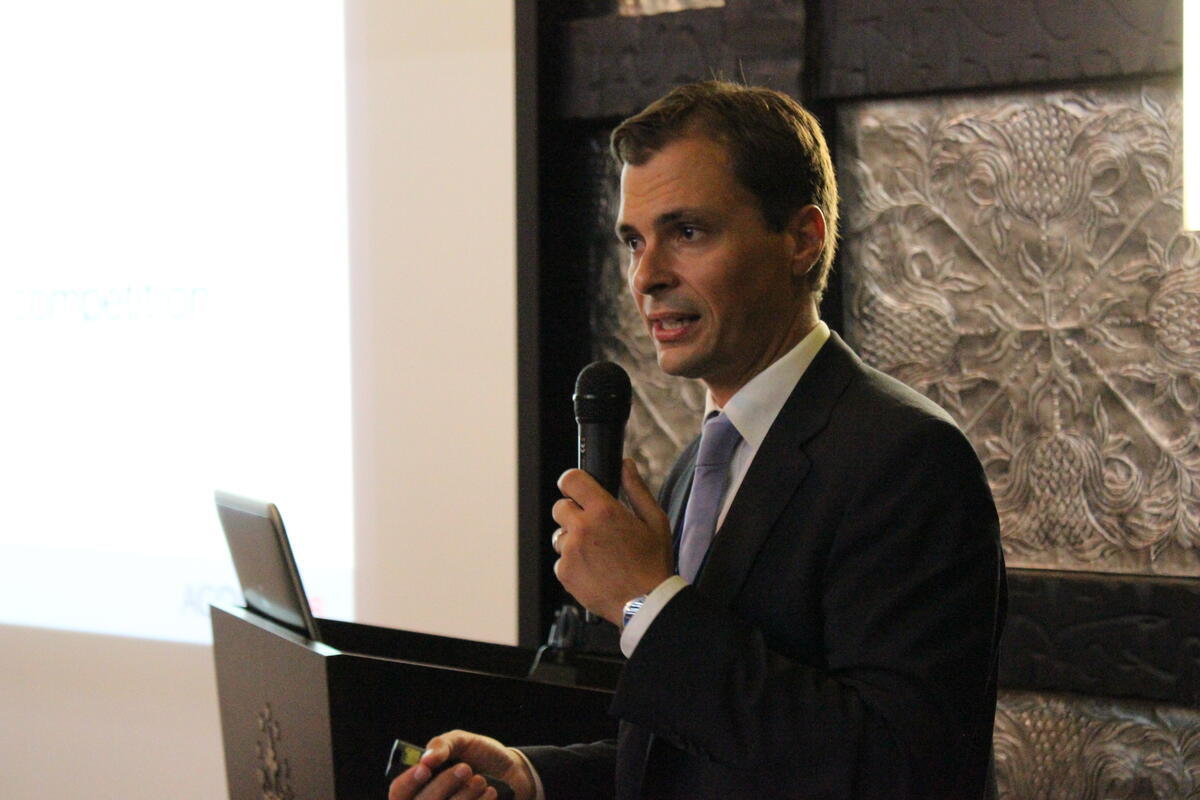
The 6th International Scientific Conference “Education, Research & Development”, held from 4 to 8 September 2015 at Elenite Holiday Village, Bulgaria, featured a plenary lecture by Dr. Stefan Handke, Head of the International Department at the Accreditation, Certification and Quality Assurance Institute (ACQUIN), Germany. His presentation, entitled “Certification of Internationalisation Strategies of HEIs”, addressed the growing importance of internationalisation and quality assurance in higher education.
Dr. Stefan Handke is a political scientist with a PhD in public policy. As Head of the International Department at ACQUIN, one of Germany's established accreditation and quality assurance agencies, he specializes in university accreditation, institutional evaluation, and the certification of academic quality standards. His plenary lecture focused on the assessment and recognition of internationalisation strategies in higher education institutions, a subject of increasing relevance to universities seeking to strengthen their international academic cooperation.
We were pleased to welcome Dr. Handke as a plenary speaker and appreciate his contribution to the scientific programme.
Dr. Stefan Handke is a political scientist with a PhD in public policy. As Head of the International Department at ACQUIN, one of Germany's established accreditation and quality assurance agencies, he specializes in university accreditation, institutional evaluation, and the certification of academic quality standards. His plenary lecture focused on the assessment and recognition of internationalisation strategies in higher education institutions, a subject of increasing relevance to universities seeking to strengthen their international academic cooperation.
We were pleased to welcome Dr. Handke as a plenary speaker and appreciate his contribution to the scientific programme.
Prof. Paul Millner Leads University of Leeds Delegation at Materials, Methods & Technologies 2015
11 June 2015
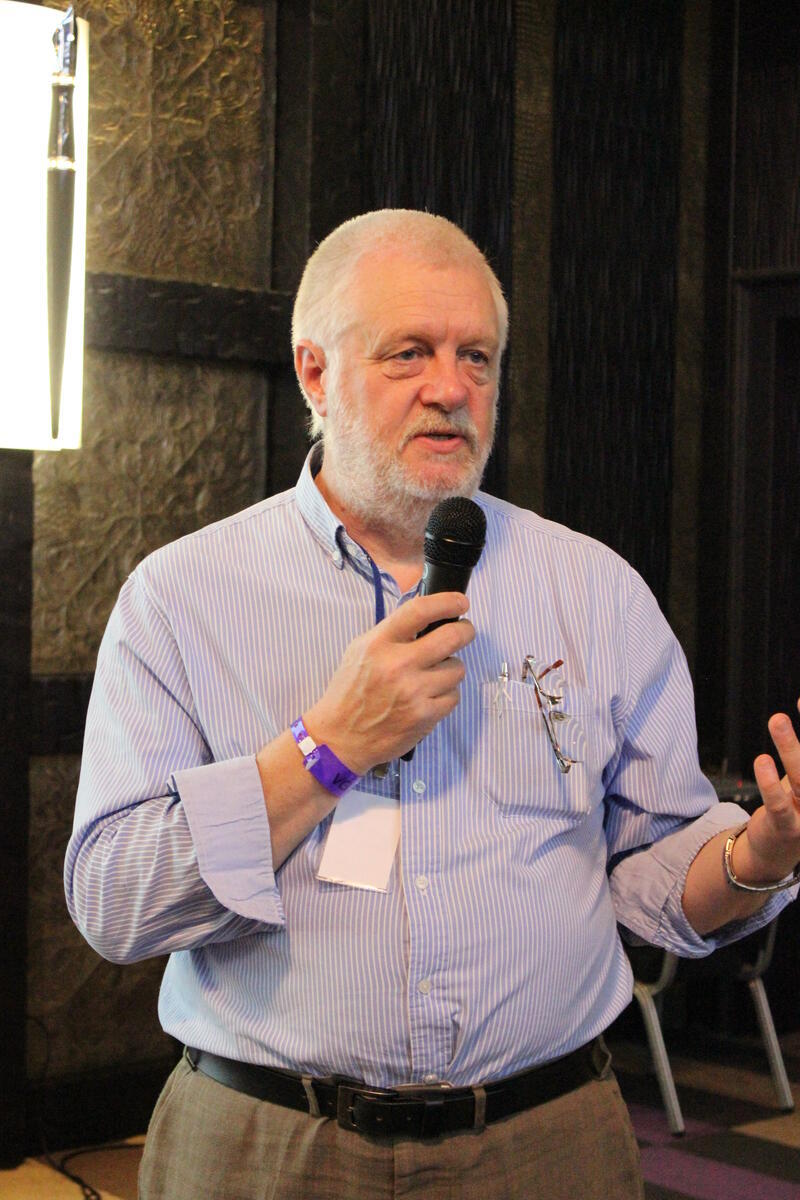
The 17th International Scientific Conference “Materials, Methods & Technologies”, held from 7 to 11 June 2015 at Elenite Holiday Village, Bulgaria, was officially opened with a plenary lecture delivered by Prof. Paul Millner from the University of Leeds, United Kingdom. Prof. Millner, Head of the School of Biomedical Sciences and Professor of Bionanotechnology, was among a delegation of six scientists from the University of Leeds participating in the conference.
His plenary presentation, entitled “Molecular Engineering: How Surface Design at the Nanoscale Influences the Performance of Biosensors and Smart Nanoparticles”, explored the interaction between biological molecules and engineered surfaces in the development of functional biomedical devices.
We were particularly pleased to welcome such a strong academic delegation from the University of Leeds, one of the United Kingdom's leading research universities.
His plenary presentation, entitled “Molecular Engineering: How Surface Design at the Nanoscale Influences the Performance of Biosensors and Smart Nanoparticles”, explored the interaction between biological molecules and engineered surfaces in the development of functional biomedical devices.
We were particularly pleased to welcome such a strong academic delegation from the University of Leeds, one of the United Kingdom's leading research universities.
Dr. John Paull from the University of Tasmania Opens Agriculture & Food 2015
5 June 2015
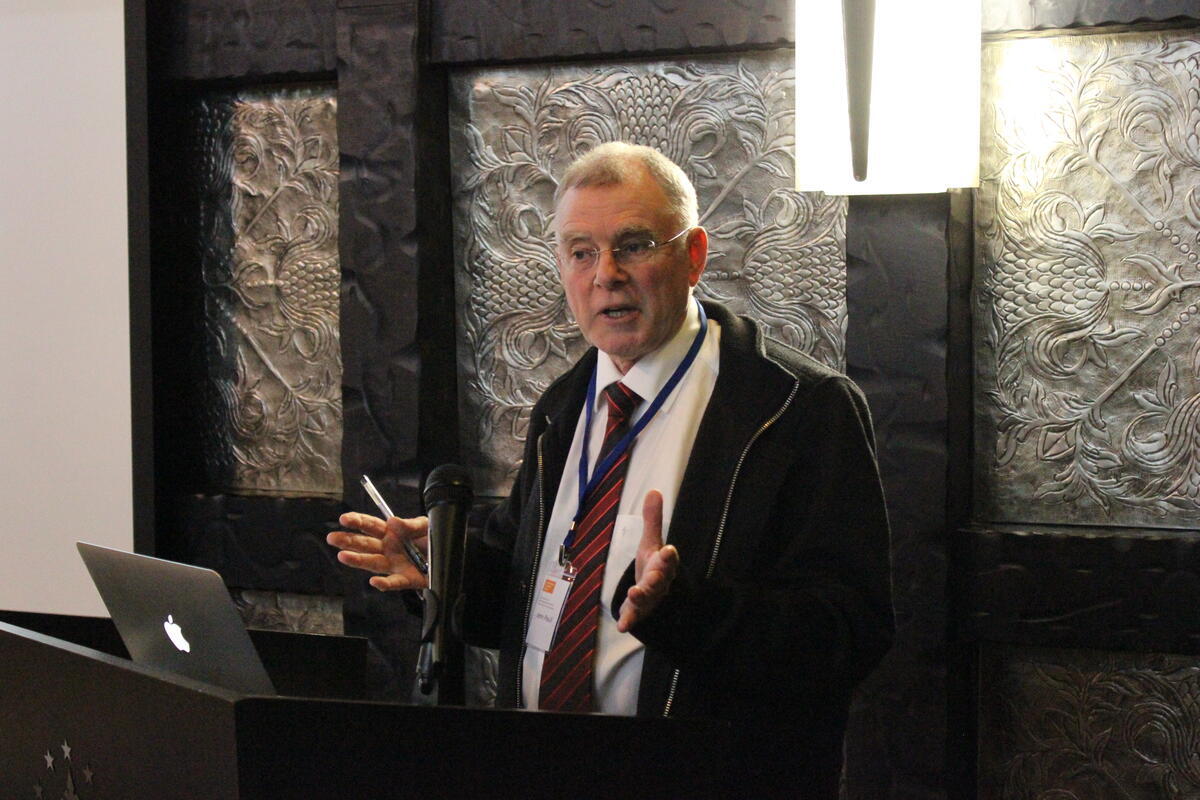
The 3rd International Scientific Conference “Agriculture & Food”, held from 1 to 5 June 2015 at Elenite Holiday Village, Bulgaria, was officially opened with a plenary lecture delivered by Dr. John Paull from the University of Tasmania, Australia. His presentation, entitled “The Threat of Genetically Modified Organisms (GMOs) to Organic Agriculture: A Case Study Update”, addressed an important and widely debated subject in contemporary agricultural science.
The plenary lecture explored the potential implications of genetically modified organisms for organic farming, drawing attention to questions concerning the coexistence of different agricultural production systems and the protection of organic agriculture. The topic provided a valuable starting point for scientific discussions on sustainable farming practices, agricultural innovation, and the future of food production.
We were honoured to welcome Dr. John Paull as our opening plenary speaker and sincerely appreciate his contribution to the scientific programme.
The plenary lecture explored the potential implications of genetically modified organisms for organic farming, drawing attention to questions concerning the coexistence of different agricultural production systems and the protection of organic agriculture. The topic provided a valuable starting point for scientific discussions on sustainable farming practices, agricultural innovation, and the future of food production.
We were honoured to welcome Dr. John Paull as our opening plenary speaker and sincerely appreciate his contribution to the scientific programme.